

Phobias
Fear of Spiders or Arachnophobia
What is arachnophobia?
Does the thought of a spider terrify you? Do you feel your heart racing when you see spiders around you, or any kind of small insects?
If so, you may be dealing with arachnophobia. This debilitating fear of spiders generally affects more women than men, but it can occur in anyone.
Arachnophobia, a term derived from the Greek words “arachne” (spider) and “phobos” (fear), refers to an extreme fear of spiders and other eight-legged arachnid creatures, such as scorpions. This fear may be linked to human evolution, as spiders—especially venomous ones—have long been associated with disease, infection, or even death.
Although it is classified as a fear, arachnophobia often also manifests as a deep sense of disgust toward these creatures. People experiencing more severe forms of arachnophobia may even avoid certain places (attics, basements, dark alleys) because they might encounter a spider there. They prefer to avoid the situation altogether rather than face it.
Arachnophobia, like any other phobia, can significantly impact a person’s life, and the reactions it triggers are irrational. Therefore, specific interventions or coping techniques are necessary to manage this fear.
How does arachnophobia manifest?
Although the fear of spiders appears more often in childhood, it can also affect adults. Some of the symptoms shown by a person who is afraid of spiders include:
- The feeling of losing control
- Sweating
- Trembling
- Increased heart rate
- The urge to cry
- A sensation of suffocation
- Screaming
- Nausea
Astraphobia can develop based on learned behaviors, but it may also be attributed to evolution or as a response to instinct.
From an evolutionary perspective, it is normal to avoid a storm. This meteorological phenomenon can be dangerous for both humans and animals, even threatening their lives.
However, overwhelming reactions that occur even when you are sheltered are irrational and can overpower you.
In general, children with autism, people with anxiety, or those with sensory processing issues are more likely to develop astraphobia, as they are more sensitive to sounds and their environment.
What can you do to overcome arachnophobia?
Typically, to reduce or eliminate the symptoms related to arachnophobia, a combination of psychotherapy and medication is used. Relaxation techniques, such as meditation and controlled breathing, can be beneficial in treating this phobia. As with other phobias, arachnophobia can be treated using virtual reality exposure therapy and cognitive-behavioral therapy.
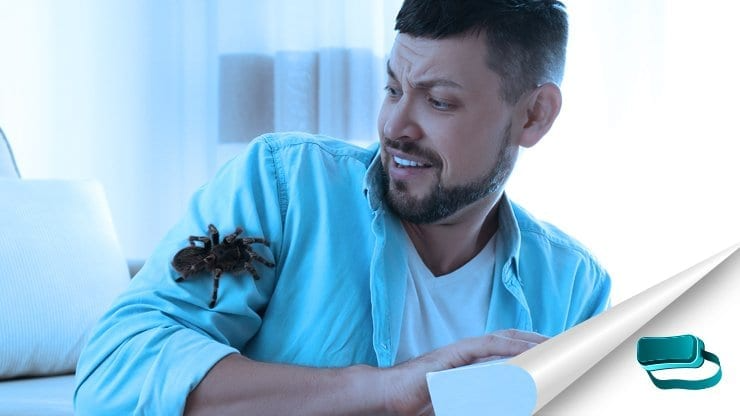
Treat the fear of spiders through Virtual Reality
Are you afraid of insects, especially spiders? What are the causes and how can you get rid of arachnophobia?
Therefore, there is the option to treat arachnophobia through virtual reality exposure therapy, in which the person confronts the object of the phobia in a virtual world that accurately simulates the anxiety-inducing situation. Studies show that this approach can be just as effective as the more traditional technique of gradual exposure to real spiders.
Inform yourself. Read about spiders. You will learn that they tend to attack only when they feel threatened. Occasionally, a spider bite can cause an allergic reaction. However, while the bites of certain spiders, such as the black widow and the brown recluse, can be dangerous, most spider bites are harmless.
Keep in mind that, in general, spiders bite only to defend themselves when they are trapped between skin and another object. You should also know that while there are over 63,000 species of spiders worldwide, only 2% of them are dangerous.
Avoid spiders. Store firewood outdoors to avoid bringing them into your home. Secure insect screens firmly on your doors and windows and seal any cracks through which spiders might enter. Make sure that the attic and garage are free of spider webs.
Talk to people close to you about your fear of spiders and let them know that you are undergoing treatment to overcome this phobia. Consult your doctor to recommend a specialist who can help you get rid of arachnophobia.
Medical Doctor, Psychotherapist & Founder of ID THERAPY
Couples issues, phobias, anxiety, panic attacks
Talk to an ID Therapy specialist
Nadia Gorduza is the only psychotherapist and trainer in Romania specialized in Virtual Reality Therapy for Phobias and Addictions.
Dr. Nadia Gorduza represents Virtually Better Inc., USA, in Romania.

Experience advanced neuromodulation
Free yourself from stress and anxiety – breathing exercises
Adress: Naum Ramniceanu Street, no. 23, ap. 1, Sector 1, Bucharest, Romania